Trading For Beginners – Why Trading Feels Confusing At The Start
Trading for beginners can feel confusing even when you are putting genuine effort into learning. The problem is often not intelligence or a lack of information. Beginners are surrounded by scattered videos, hot stock ideas, indicators, strategies, AI answers and conflicting opinions, but very little explains which lesson should come first or how the pieces connect.
She Trades Shares was built to change that learning order. First you learn how markets and trading charts work, then market structure, technical analysis and risk management begin to make more sense. Practice and paper trading come after you understand what you are practising, and confidence develops progressively through understanding rather than guessing.
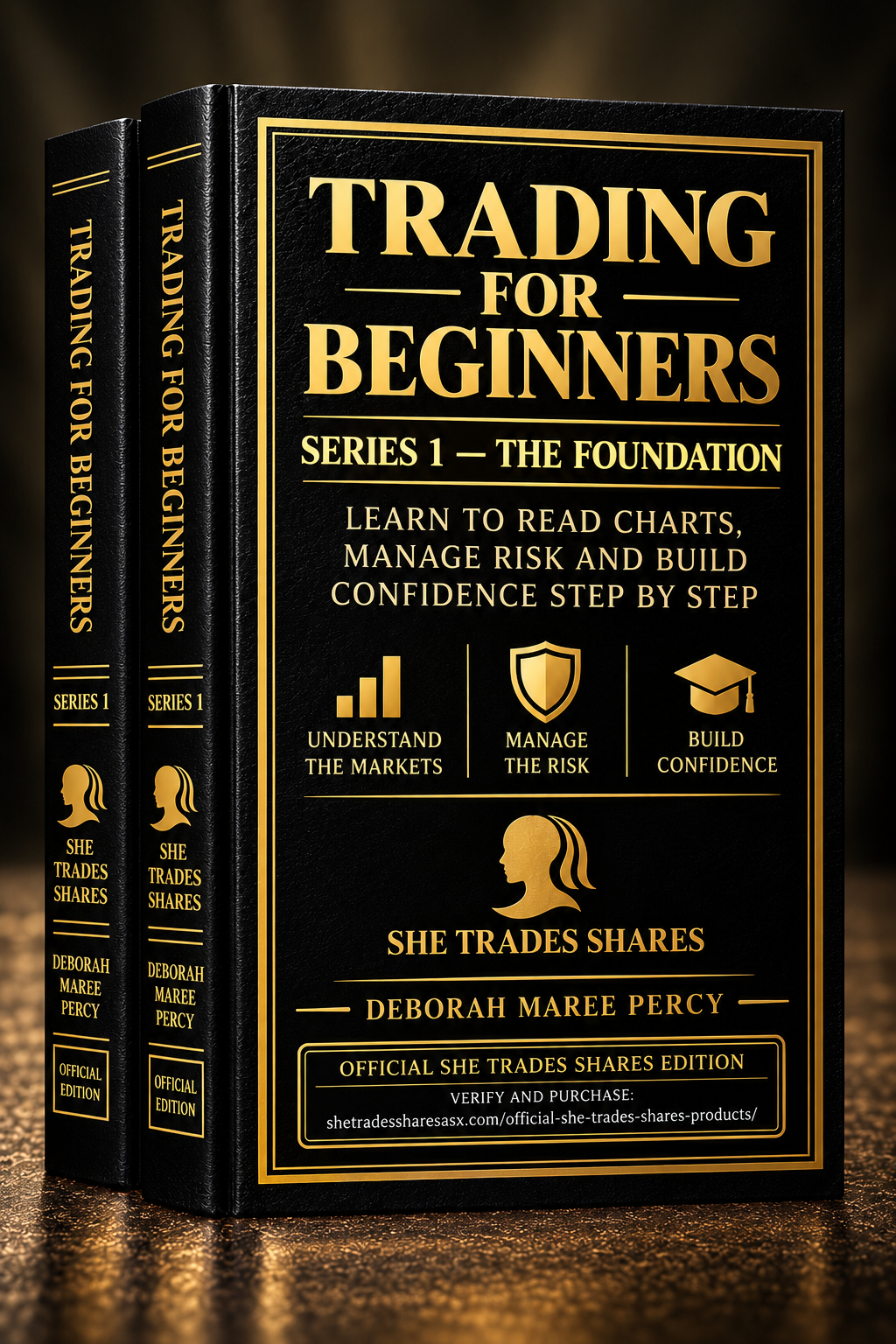
Inside the Trading Course For Beginners, the complete education is organised into 13 structured stages, with each lesson preparing you for the next. Instead of trying to build your own trading curriculum from disconnected information, you follow one learning framework from market foundations through to trading plans, psychology, practice and broader financial instruments.
Trading For Beginners – Why She Trades Shares Is Different
There is more free trading information available today than ever before. A YouTube video can explain an indicator, AI can answer a trading question, TradingView can display sophisticated charts and another website can explain a chart pattern. Those resources can all be useful, but access to information does not automatically create a structured trading education.
Information gives you individual pieces. Education shows you where those pieces belong, what should be understood first, why each stage matters and what the learner needs to understand next. A beginner can know dozens of trading terms and still feel completely lost when looking at a real chart because knowing terminology is different from knowing how the concepts work together.
She Trades Shares was deliberately designed from the perspective of a complete beginner. Nothing important is deliberately skipped and nothing is assumed simply because an experienced trader already understands it. Every lesson prepares you for the next, so instead of continually collecting more information, you progressively build understanding.
Trading For Beginners – Learn The Right Skills In The Right Order
A structured way to learn trading means you are no longer guessing what should come next. You begin to understand what deserves your attention first, what can wait until later and why each trading concept belongs inside a wider process. Instead of jumping from one strategy to another, you build knowledge progressively.
Instead of collecting more tools, you learn why particular tools are useful. TradingView becomes a place to observe charts and practise, AI becomes a support tool for learning and revision, and technical analysis begins to have context because you understand what you are trying to analyse. Tools support understanding; they do not replace it.
The learning process starts with context before confirmation and risk before reward. You gradually learn how higher-timeframe structure, support and resistance, market behaviour and risk fit together before live execution becomes the focus. When the learning order becomes clearer, trading can begin to feel more logical and less like an endless collection of unrelated decisions.
Trading For Beginners – Why Dependency Does Not Build Understanding
One of the biggest problems for beginners is becoming dependent on someone else’s conviction without understanding the reasoning behind it. Signals, indicators, influencers, AI answers and trading strategies can all appear to provide certainty, but following them without understanding does not build your own decision framework. It simply transfers the decision to someone or something else.
Confidence through education works differently. You gradually learn what you are looking at, why a particular part of the chart matters, where risk sits and what information deserves less attention. The objective is not to remove uncertainty from trading; it is to develop enough understanding that you can make more informed decisions without constantly needing someone else to tell you what to do.
What Beginners Say When Trading Finally Starts To Make Sense
★★★★★ “For the first time the penny has dropped.”
★★★★★ “It finally makes sense.”
★★★★★ “It’s like having a roadmap instead of scattered information.”
That change in understanding is what the She Trades Shares Trading Course For Beginners is designed to support. The aim is to replace random learning with structure and give beginners a clearer way to connect charts, technical analysis, risk management, paper trading and trading psychology before real money creates additional pressure.
Trading For Beginners – Structure First. Strategy Second. Always.
This is one of the core principles behind the She Trades Shares approach. Strategy has much less meaning if you do not understand the market structure around it. Indicators and trading tools can provide useful information, but they become more useful when you understand why you are using them and what question they are helping you answer.
As your trading education develops, you begin learning to ask clearer questions:
- What is the broader trend and market structure?
- Where are the important support and resistance areas?
- Is price trending, correcting or moving sideways?
- What information would challenge the trading idea?
- Where is the financial risk before any execution decision is made?
The purpose is not to give you a checklist that replaces education. It is to show why structure and risk need to be understood before strategy and execution. If this learning approach feels more logical, the next step is to see how the complete 13-stage Trading Course For Beginners Framework is organised and exactly what is included before deciding whether it is right for you.
Ready To Build Trading Confidence Through Understanding?
See The Full Trading For Beginners FrameworkOfficial She Trades Shares Product
Before purchasing, you can verify the Trading For Beginners course and its authorised purchase information on the official She Trades Shares product-verification page.
Verify This Is A Genuine She Trades Shares ProductTrading For Beginners – Information Is Everywhere. Understanding Requires Structure.
You do not need to stop using YouTube, AI, TradingView or free trading resources. Used properly, each can support your learning. The problem begins when a complete beginner has to decide what to learn first, which information is reliable, what important foundation may have been missed and how hundreds of separate answers are supposed to become one trading process.
That is why a structured trading course exists. A curriculum does more than answer today’s question; it prepares you for tomorrow’s question by making sure the required foundation has already been taught. Instead of repeatedly starting over, you continue building on what you already understand.
The objective of She Trades Shares is not to make you dependent on Deborah, a course, software or AI forever. The objective is the opposite: to progressively build your knowledge so you can understand charts, assess risk and make more informed trading decisions for yourself.
Trading For Beginners – Your Next Step
You now understand why learning order matters and why information alone does not always create understanding. The next page shows you exactly how that learning order is taught inside the complete Trading Course For Beginners Framework. You can see the 13 stages, major topics, practical resources, optional AI Study Buddy and AU$99 price before deciding whether the course is right for you.
You are not being asked to buy without understanding what you are getting. The next page exists specifically to answer that question. If you want to see how chart reading, market structure, technical analysis, risk management, paper trading, psychology and trading plans are connected into one beginner learning framework, continue below.
See The Complete 13-Stage Trading Course For Beginners Before You Buy
See What You Get Inside The Trading Course For Beginners For AU$49The Trading Course For Beginners is designed to help complete beginners learn chart reading, market structure, technical analysis, risk management, TradingView, paper trading, trading psychology and trading plans through one connected educational framework.
After The Foundation
Where Can Your Trading Education Go Next?
Series 1 is the foundation of the She Trades Shares learning journey. Once those foundations are understood, you can begin choosing which markets or instruments you want to explore in greater depth rather than trying to learn everything at once.
Futures Trading For Beginners — Series 2 is the first instrument-specific branch of that learning journey. It applies the foundation to leveraged futures markets through a risk-first workflow covering futures mechanics, market exposure, position sizing, market structure, preparation, execution, discipline and review. It is designed for learners who have completed Series 1 or already have equivalent foundational trading knowledge.
One foundation. Then choose where to apply it.
Explore Futures Trading For Beginners — Series 2Important Note
Educational purposes only. This page provides general educational information and does not constitute personal financial advice or a recommendation to buy or sell any financial product. Trading and investing involve risk, and individuals are responsible for their own financial decisions.
She Trades Shares — Where Knowledge Builds Confidence.